
Some key insights into the sector's process of adapting to a new era
In recent years, the cultural sector has embarked on a process of transformation and digital adaptation. Museums, art centres, archives, libraries and theatres have been rethinking new ways of reaching an increasingly diverse and demanding public, within a digital paradigm that changes every day.
In this article, I'll share some insights into the needs, challenges and digital solutions the cultural sector has arrived at in 2025.
The challenge: staying relevant
It's impossible to discuss digital strategy in museums without going back to the COVID-19 pandemic, which forced museums all over the world to rethink their strategy. Having to close their doors to the public, they faced the need to develop digital offerings in order to stay in touch with their audiences. Physical spaces shut their doors, and digital spaces gained momentum.
According to ICOM, during the pandemic many museums explored new formats, such as podcasts, to engage with their target audience. Today, even though museums have reopened their doors, having a digital strategy remains crucial to maintaining relevance, connecting with audiences, adapting to (and adopting) new technologies, and raising awareness of their collections and offering.
Some key elements of digital strategy in museums
More and more museums and cultural organisations are making their digital strategy statement or mission public, such as the Tate Modern (UK) or the Landesmuseum (DE). Some of the solutions and proposals that have been implemented include the following:
Audience knowledge
Part of a museum's digital strategy involves understanding the audience and building a new relationship based on collaboration, co-creation and interaction. According to NEMO (the Network of European Museum Organisations), it is essential to have an in-depth understanding of the different user profiles and their needs. 💡How well do museums currently know the users of their digital products? At Interactius we can help answer that through User Research ♥️
Digitisation and democratisation of collections
Through the digitisation of collections and 360º virtual tours, museums can bring their collections closer to the public. Platforms such as Google Arts & Culture make the catalogues of museums and cultural centres accessible to a wide audience. It's easy to get lost among thousands of works and resources, but it's well worth exploring.
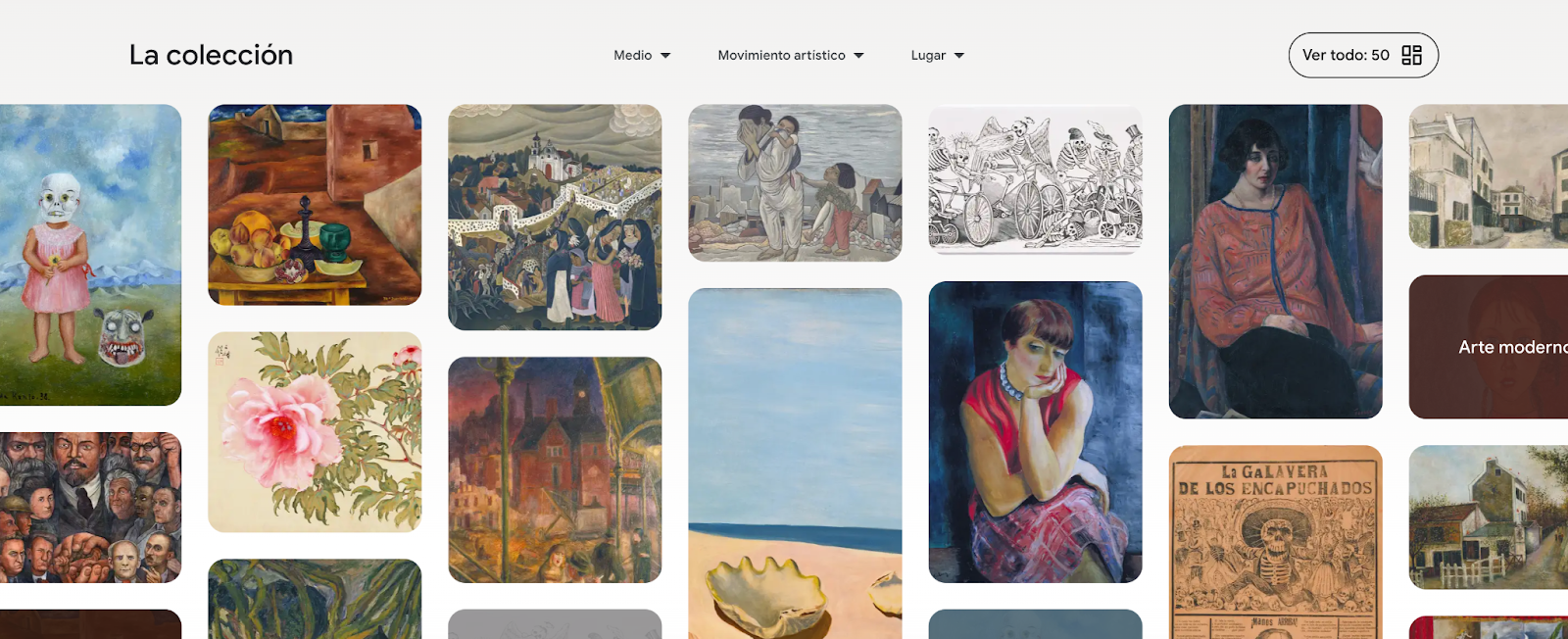
Source: Google Arts & Culture - Nagoya City Art Museum
Focus on accessibility
One of the key pillars of museums' digital strategy is making digital tools accessible to all users, including accessibility measures to remove barriers and inequalities in access to collections. A starting point is accessibility audits: in 2024, audits were carried out on 17 museum websites, including the Louvre, the British Museum and the Museo del Prado, with a particular focus on date-selection and ticket-purchasing functionalities.
(If you're interested in reading more about accessibility, I recommend visiting the Interactius blog)
Social media engagement
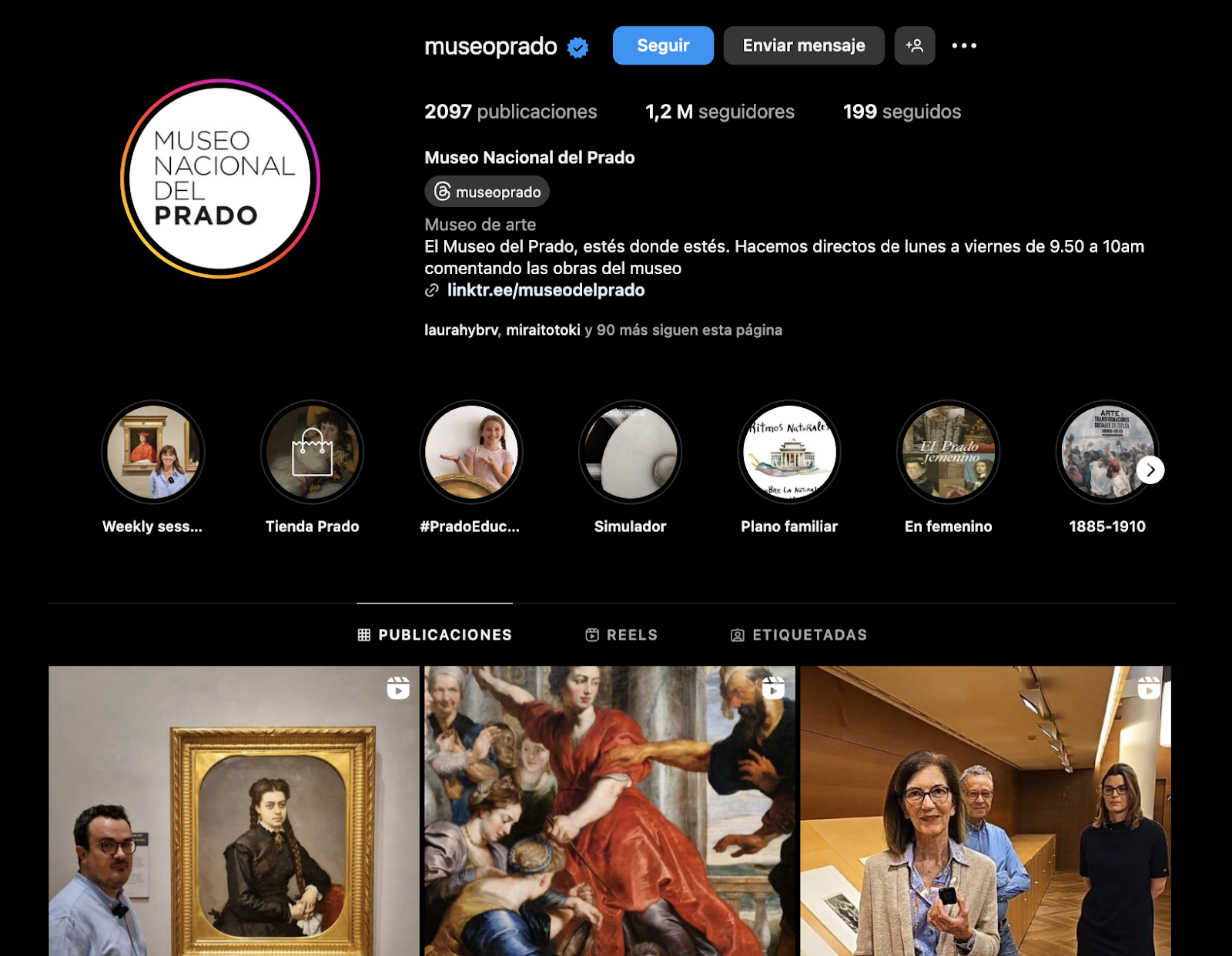
Many museums choose to strengthen their presence on social media, whether through Instagram or TikTok. One example is the #VersionaThyssen initiative, which invites illustrators and artists to reinterpret works from the Museo Thyssen in their own way and share them on Instagram. Other initiatives include livestreams: museums such as the Prado broadcast weekly live videos, which helps grow their following and strengthen the connection with their audience.
Offering interactive experiences
One of the challenges for museums is rethinking the dynamic between the audience and the artwork: moving away from the passive spectator, and making visitors an active part of the exhibition experience. Some of the ways museums are bringing the public closer and encouraging interaction with their collections include exhibitions that incorporate Virtual or Augmented Reality. Many museums around the world have adopted this type of technology. In Barcelona, spaces such as the Centre d'Art Amatller regularly integrate this technology into their exhibitions, under the artistic direction of LAYERS OF REALITY (lDEAL Barcelona).
The Making of Modigliani VR: The Ochre Atelier
Use of artificial intelligence
The EU is actively promoting the use of AI in the cultural sector, including museums and institutions. Some of the objectives include:
- Cataloguing and archiving information
- Supporting the restoration of assets
- Tracking visitor numbers
- Analysing visitor feedback
- Personalising the user experience
While Artificial Intelligence can be a powerful ally for the sector, there are outstanding challenges: ensuring it is implemented in an ethical manner and with respect for audience privacy, as well as reducing the carbon footprint of current models.
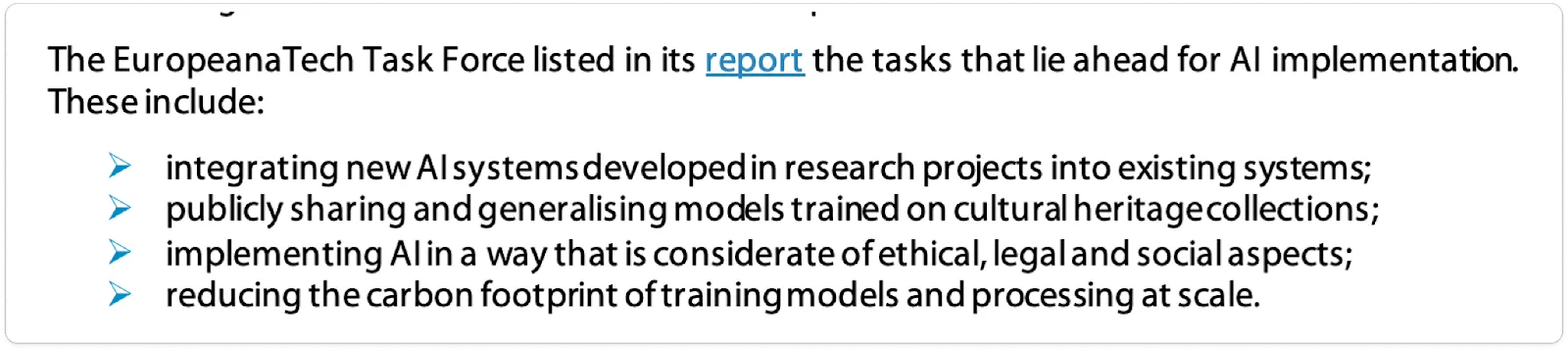
Briefing - Artificial intelligence in the context of cultural heritage and museums (2023)
Measuring impact
Data is key to evaluating the impact of a digital strategy. It allows for a better understanding of audiences, optimisation of resources and evidence-based decision-making. From a strategic perspective, it enables institutions to track:
- Visitor demographics: age, gender, nationality, group size
- Engagement metrics: levels of interaction with exhibitions and presentations
- Marketing effectiveness: identifying which campaigns achieve the greatest success
- Revenue trends: understanding purchasing behaviour around tickets, merchandise and memberships
The digital future of museums and institutions
The digital transformation of the cultural sector is in constant evolution. In 2025, talking about culture also means talking about accessibility, innovation and interaction. Even so, there is still a long way to go. It would perhaps be beneficial to see more UX profiles within museums and institutions, and for these roles to be embraced as a key part of a solid digital strategy.
Because a digital strategy and strong UX are the pillars upon which new ways of connecting with audiences — and generating genuine interest in culture — can be built.
Sources:
https://espanadigital.gob.es/en/measure/digitalization-culture https://www.museumnext.com/article/how-museums-are-using-virtual-reality/ https://lab.cccb.org/en/digital-transformation-in-cultural-organisations/ https://en.audio-cult.com/digitale-strategien-im-museum-eine-anleitung#:~:text=A%20comprehensive%20digital%20strategy%20enhances,educational%20content%2C%20and%20public%20programs. https://mapsted.com/blog/museum-big-data-explained