
Rebel Inbox was Interactius's initiative at the Blanc! 2025 festival, inviting the design community to pause and reflect. These voices culminated in the creation of a living archive.
Every movement that has ever wanted to change something began with a manifesto. The Manifest Groc of 1928, signed by Dalí, Montanyà and Gasch, was a kick against academicism and bourgeois culture: a declaration of war on the established order.
Decades later, Bruce Mau published his Incomplete Manifesto for Growth, a list of principles that understood design as a transformative force, above and beyond mere form.
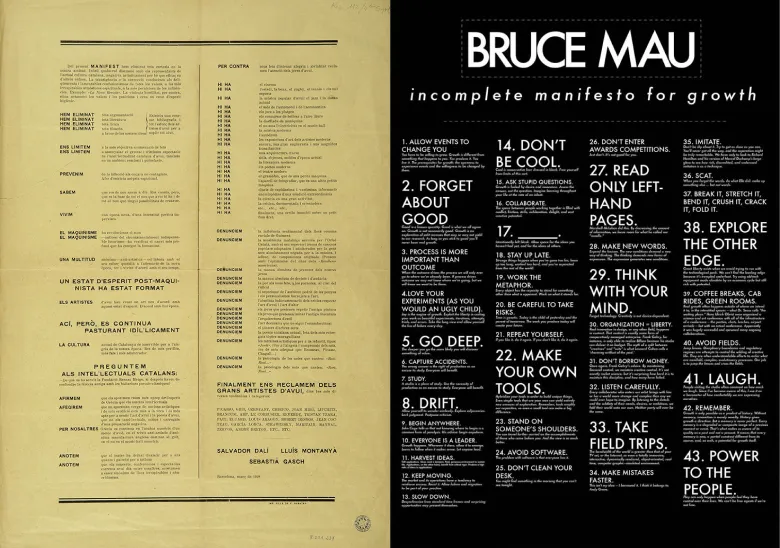
Both shared something essential: the need to take a stance. To stop the noise and say _"_we believe in this".
And yet… do we actually know what we believe in today?
In a context where everything is updated every 24 hours and AI promises to design faster than we can, stopping becomes urgent. Not to romanticise the past, but to remember why we do what we do.
At Interactius, in one way or another, we always return to that idea. And we do so by designing spaces of resilience, combining reflection and play, where people can think about themselves and the design they practise.
And what better place than the BLANC! festival to "perform" this idea?
Blanc! Festival 2025
Once again, we took part in this design and creativity festival that connects the creative community from a genuinely authentic and close-knit place. It is an event made from within the profession, one that tries to make sense of what we do (so naturally, it was easy to find common ground).
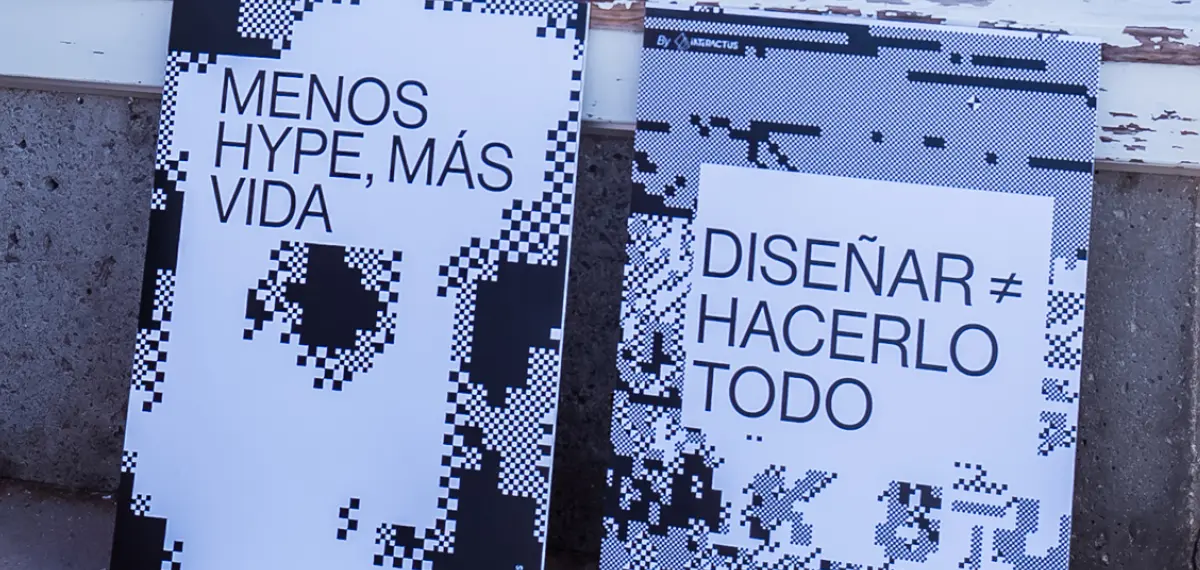
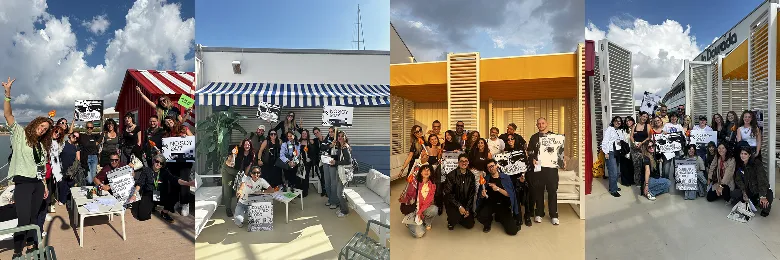
To stir things up a little between sessions and open up spaces for real reflection, we created Rebel Inbox: an analogue device in the form of a collective letterbox. Going back to paper in the midst of the digital age was not just a whim (though that too), but a challenge in itself: how long has it been since you last wrote by hand? Is there anything more personal than your own handwriting?
The proposition was simple: write a letter to an unknown recipient and set down thoughts, reflections and doubts on 5 major themes that we identified as the "contemporary pain points" of design today.
The result: a living archive of voices where the form (paper, ink, time) accompanied the substance: stopping to think.
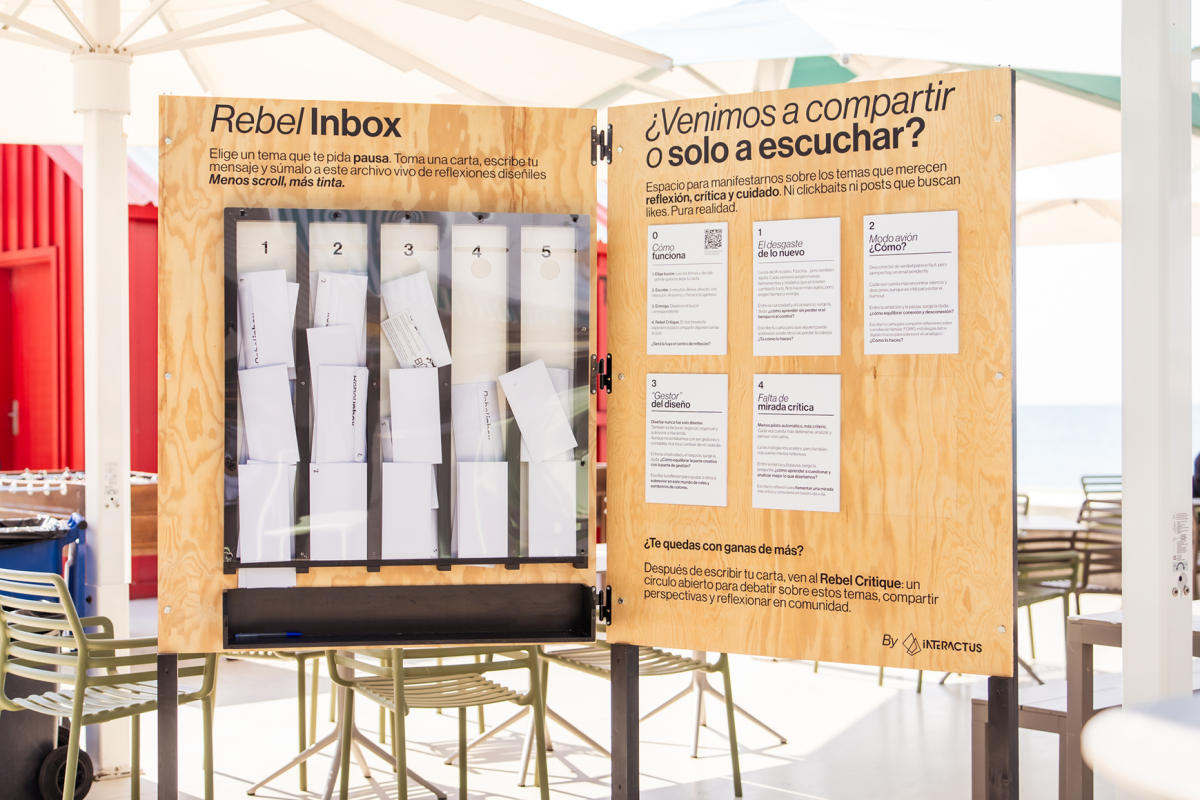
What keeps designers up at night?
The exhaustion of the new
The wave of Artificial Intelligence shows no sign of stopping: every week brings new tools, updates and models that promise to revolutionise everything. New technologies help us work more efficiently, but they are also demanding: they consume time and energy. Caught between fascination and burnout, we find ourselves asking: how do we learn everything new without losing control or too much time?
Amid all these updates, one clear idea emerged: not everything new is better.
Aeroplane mode
Truly disconnecting: switching off notifications, quietening the mind and putting work on pause. It sounds simple, but we never quite manage it. There is always another email to check. It is becoming increasingly hard to find moments of silence and rest, yet it is more necessary than ever to avoid burnout. Caught between ambition and pause, we find ourselves asking: how do you move between connection and disconnection?
Many designers admitted they did not know how to stop. From that contradiction a certainty emerged: creativity needs silence. As one letter put it: "Designing also means knowing how to do nothing — what matters is born from emptiness."
Being the "Manager" of design
Designing means invoicing, negotiating, organising, defending ideas and, if you are freelance, surviving the tax office without going into the red. Even though we never dreamed of becoming sales reps, managers or accountants… we find ourselves forced to wear different hats every day. Caught between creativity and business, we find ourselves asking: how do we learn to shift and manage the role beyond design itself?
The exhaustion of multi-role working was mixed with a certain resignation. "Am I really a designer? When you're doing so many things at once, you start to question what your purpose is and what you're actually a professional at." Perhaps the key is not to return to a "pure" version of the role, but to learn to live with all the versions of ourselves and find a workable balance between them.
Critical thinking
We often struggle to stop and analyse information, detect biases or draw well-founded conclusions. Thinking critically demands attention, patience and time: precisely what is in shortest supply. New technologies make us faster, but perhaps also less reflective. Caught between inertia and reflection, we find ourselves asking: how do we cultivate the capacity to question, doubt and analyse what we design and what we consume?
The letters spoke of biases, automatic responses and mental fatigue. Someone wrote: "I'm more afraid of losing my curiosity than I am of AI." Thinking critically — questioning, doubting, pausing — is what keeps design alive.
Ethics or likes
Design is not neutral: it transmits values, shapes narratives and legitimises discourses. In a context of growing social sensitivity, our designs are expected to be inclusive and responsible.
Within that expectation, a tension arises: are we designing out of genuine conviction, or simply striking a "woke" pose? Caught between authenticity and performance, we find ourselves asking: how do we distinguish a design conceived for the common good… from one designed for applause on social media?
The letters reflected on how certain intrusive thoughts take hold of us. One of them summed it up like this: "I can't stop wondering what it means to do it well, both aesthetically and ethically. Especially when I'm advocating for something — that's when the monsters come out."
Others were bluntly grounded in reality: "Neither ethics nor likes — in many cases you can only afford to design for money." And more structural proposals also emerged, such as this one: "Measuring the ethics of projects would be a valuable KPI."
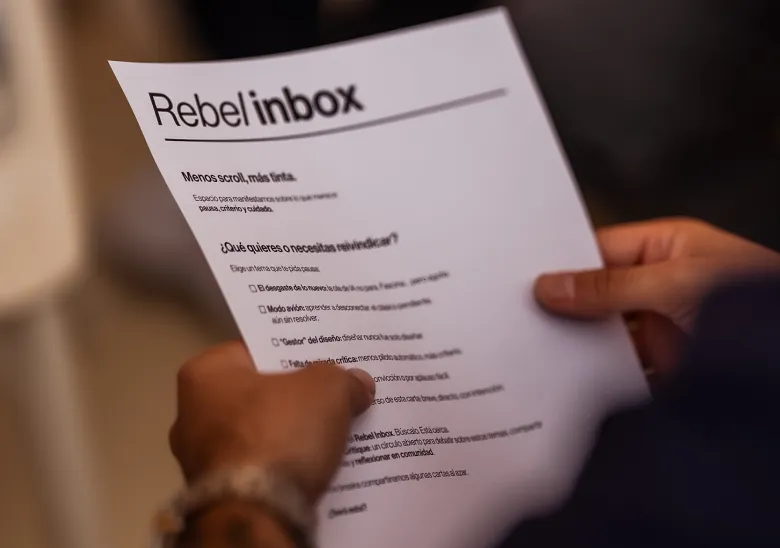
Each letter was a window onto the real tensions of contemporary design; small confessions about how we live design today.
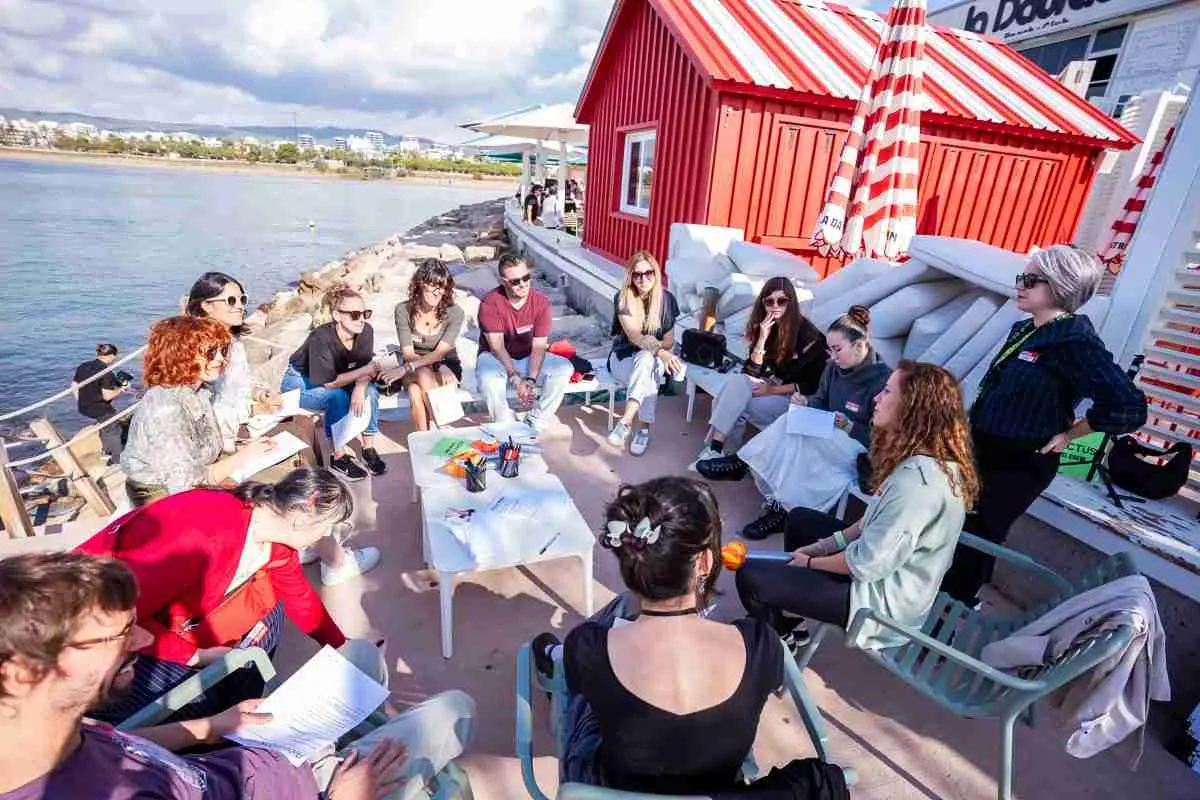
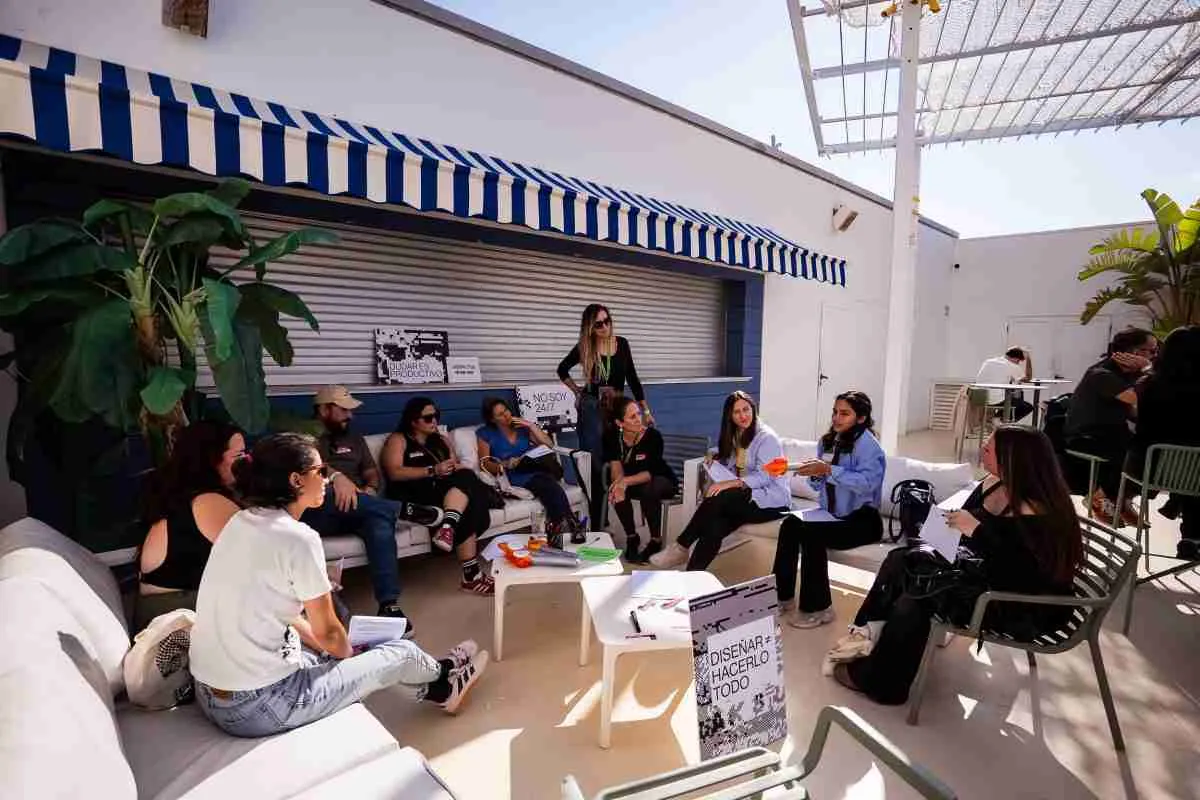
Afterwards, for those who wanted to go a little further, we invited them to our own Rebel Critique: an ironic reinterpretation of the classic design critique concept.
Ordinarily, a design critique is a session for analysing a design and offering actionable feedback: what works, what does not and what needs rethinking. This time, what we put up for review was not mockups or interfaces, but the letters themselves. We opened them to the group, read them aloud and used them as a catalyst for debate.
What surfaced there were not merely opinions: they were emotional red flags, confessions that smelled of exhaustion, irony and a desire for change.
Believing in (design) again
We did not leave these spaces with a list of actionable tips or a guide to surviving the chaos of contemporary design. That was never the aim. What we did take away was a fairly simple certainty: what we need most right now is to stop.
It feels as though we have forgotten how important it is to share and unload what is happening to us with other people, with fellow professionals. And yet that is precisely where the strength lies: in the collective, not in the isolated individual. As a group, everything becomes more transformative, feels lighter and, above all, is far more enjoyable.
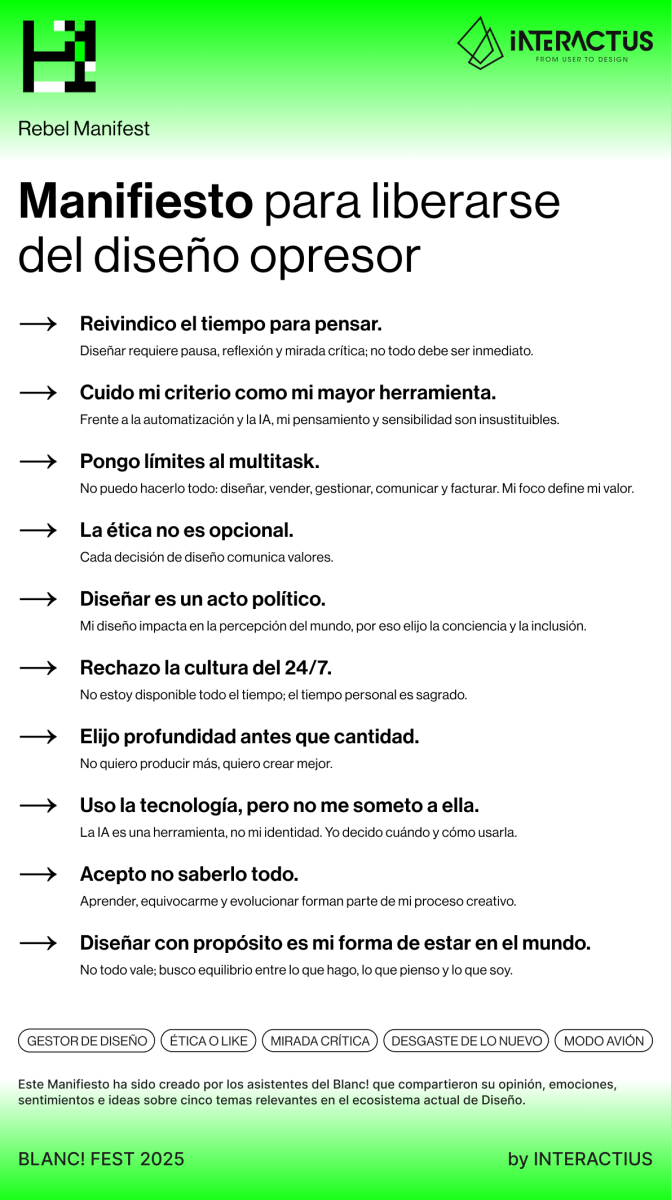
That is why we wanted to gather all those festival conversations into the "Manifesto for Liberation from Oppressive Design". A manifesto written by many hands and many voices, which does not claim to be the final word, but rather to leave a trace. A reminder that design is not saved by more tools, but by more awareness. And that, perhaps, believing in design again starts first with believing in the people who practise it.