
A reflection on automatisms, digital interfaces, the role of designers, and plenty of memes.
Design, as Christopher Jones proposes, has the effect of initiating a change in what humans do. This change can be beneficial for majority social groups, or it can serve to reinforce an unequal class system, as designer Dejan Sudjic suggests.
For Ezio Manzini, design is a way of thinking and acting. In this sense, the pursuit of thinking in design is what drives me to reflect on the role of designers, the social context in which the discipline develops, and the impact of production on the cultural and social contexts where we practise design.
I will approach this reflection from the perspective of user experience design, a discipline that has its origins in the field of Human-Computer Interaction, during the 1980s and 1990s, with the emergence of the first digital interfaces.
User experience design focuses on facilitating the use of products or services whilst taking into account the needs of end users. From its origins to the present day, UX design has undergone significant changes, evolving from a field of practice focused on addressing concrete everyday needs to positioning itself as a branch of advertising and marketing.
Today, those who have worked or currently work in the area of digital products — at least within corporations, big techs or startups — will know that behind every design decision there is an objective of monetisation and measurement in terms of consumption. What doesn't convert, doesn't work. In this context, the space for influence and creativity in which designers can intervene is increasingly small, and the elements that survive on screen will be those that generate an economic benefit. When commercial decisions take precedence over communicative ones, the graphic and visual resources used on digital screens become increasingly similar to one another.
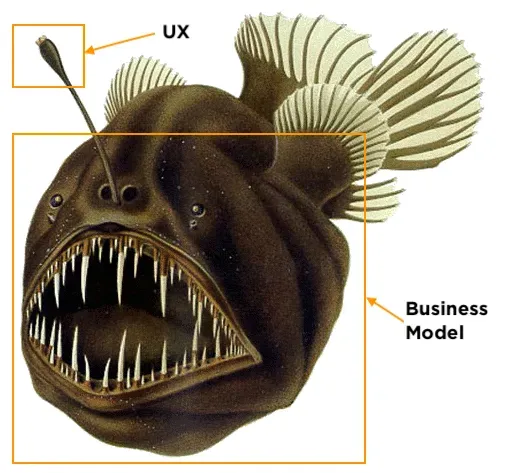
In recent years, interface designers have increasingly coexisted with the use of algorithms to gather data about people. From this data, algorithms define a pattern that predicts actions.
One example of this is the recommendations Spotify makes after you have listened to a particular type of music. Alongside algorithms, the use of A/B testing makes it possible to determine what kinds of colours, typefaces or images are most effective at keeping people on screens for longer. More than ten years ago, Google was already using this type of testing to define the tone of the Gmail interface, testing more than 40 shades of blue before ultimately selecting the one with the highest number of clicks.
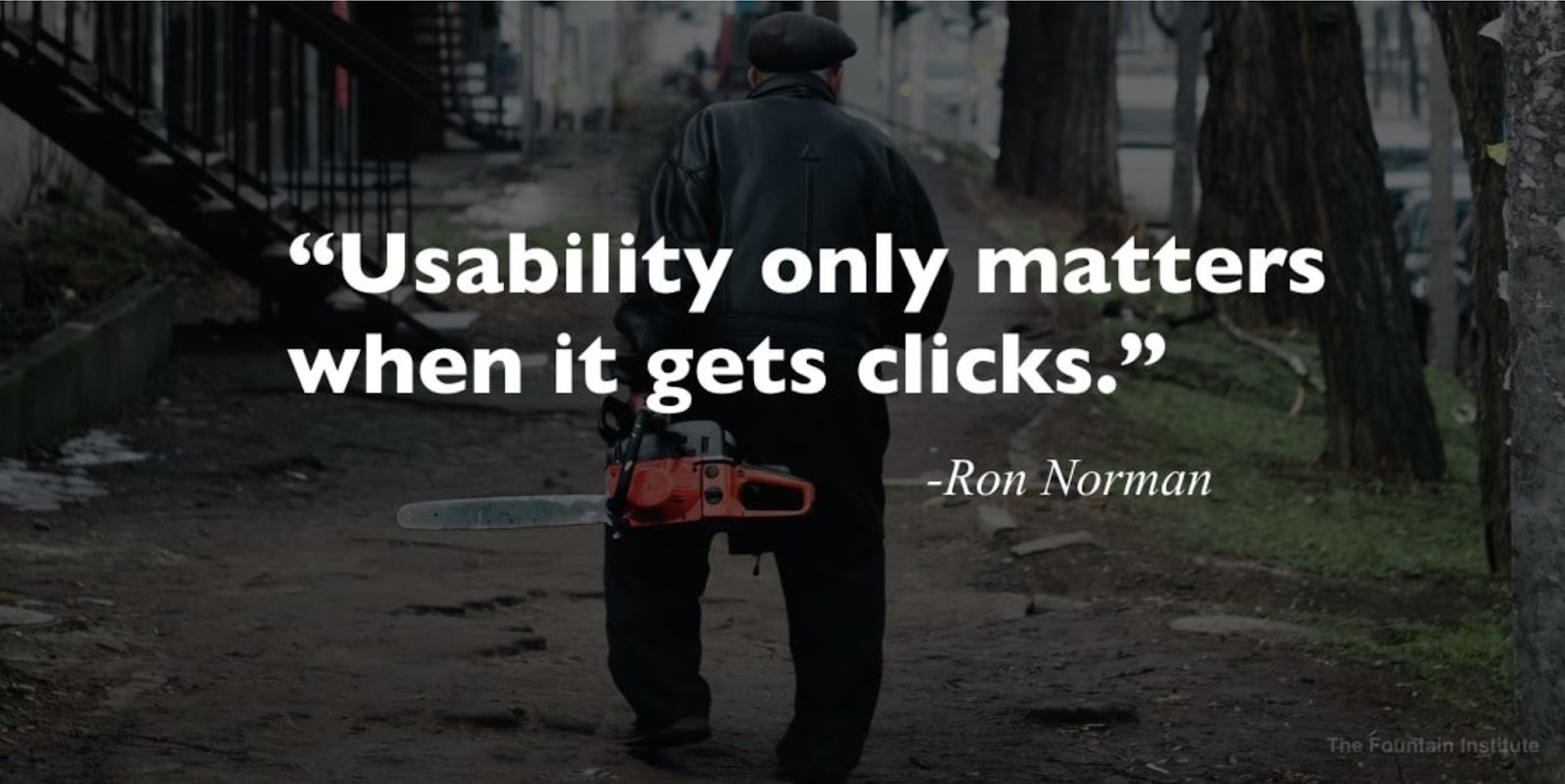
This information allows those who make business decisions to define what types of elements should remain on screens, even when these do not always respond to genuine user needs nor to design objectives. For instance, a field increasingly close to user experience design — behavioural design — has found that the use of rounded-corner buttons on e-commerce pages generates more revenue than those with square corners. In this way, apps and websites become more and more alike. As Ruben Pater proposes, this "aesthetic of automation has evolved towards a more uniform visual culture".
Design designs us
If those of us who work in design are users of mass daily-use platforms — such as Instagram, WhatsApp, Facebook, Netflix, Google Maps or TikTok — and if these in turn belong to a small group of large corporations, in what ways will those visual experiences operate in the creation of other digital interfaces? If these platforms function as technological supports that enable the experience of the "visual event" (Mirzoeff, 2003), in what ways do they shape what is observed and interpreted by users?
The result of design becomes a spiral, in which the construction of design is based on what is perceived, whilst at the same time that perception is shaped by what is designed. Maza and Valdivieso argue that there now exists a subject with no "identity other than that given by the medium". If this is the case, is it possible to conceive of a design identity of one's own, given the impact that digital media exerts on our everyday lives?

These questions arise as prompts to continue deepening the task of thinking about the ways in which we do design and the challenges our discipline faces in a constantly changing world. Reclaiming a critical perspective in the design of digital interfaces is fundamental to restoring an identity to this discipline and enabling it to practise the task of designing with awareness. Returning to the role of subjects who initiate change, in order to give meaning to our existence. Questioning the technological discourses of speed and automatism that seek to make us desire what is merely useful, or to manage our lives as one manages a design brief.
As Arturo Escobar proposes, "designers would have to go far beyond the objective of satisfying user needs in order to articulate, in novel ways, the concerns and desires of a collective". And this we will be able to achieve if we recover the power of looking without reducing "contemplation to a purely inert passivity", as the Argentine writer Martin Kohan puts it.
In a world where automation and commercial decisions dominate digital design, it is crucial that designers reclaim our critical capacity to create truly meaningful experiences. At Interactius, we understand the profound impact that well-considered interfaces can have, not only on users, but also on social and cultural dynamics. If you are looking to redesign your users' experience in a considered way — aligned with their real needs and not merely with commercial objectives — we are here to help. Contact us and together we will ensure your design has a lasting and authentic impact.