
How we designed and facilitated the GALP Costa Central hackathon to turn real challenges in the fishing industry into actionable proposals.
When people talk about innovation, they almost always start with the tool: artificial intelligence, data, the latest platform. But technology solves nothing on its own. Innovation that leaves a mark begins much earlier, somewhere less comfortable: in genuinely understanding the problem, and in putting the right people to work on it.
On 19 June 2026, coinciding with World Oceans Day, thirty people came together for six hours to do exactly that. At Interactius we had the opportunity to design and facilitate this hackathon for our client, GALP Costa Central: a good example of how we turn a real challenge into a decision-making process with method.
And it was not in just any room. The day was held at the Confraria de Pescadors de Barcelona, the fish market of the port of Barcelona — no better place for it. Working where the trade is lived allowed the teams to genuinely empathise with the sector from the first minute.
“Young skippers who have just inherited the boat want to cut down on admin time: every hour ashore is an hour they cannot fish.”
Point of view from the empathy phase, Challenge 2.
One goal: mobilising society around fishing
Beyond generating ideas, the day had an underlying purpose: to mobilise society to take collective part in the search for solutions for the fishing industry. A sector that can only be understood through its triple impact: the impact on fishing activity itself, the social impact on the community, and the economic impact of everything orbiting the sea, from marketing through to hospitality.
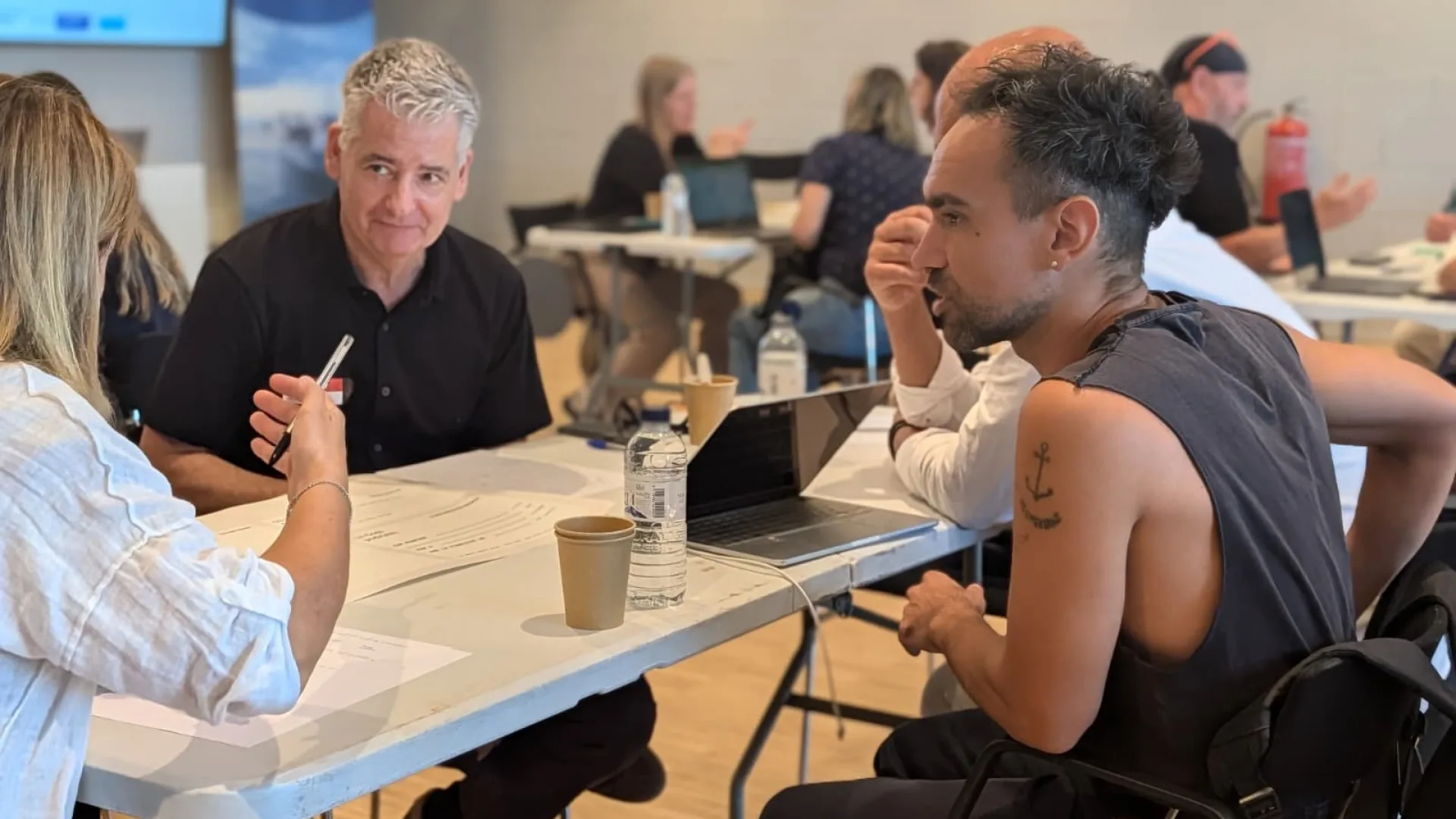
Our role was end-to-end: we designed the day together with GALP, prepared the preliminary material and facilitated the session across the six hours of the event, supporting each team phase by phase.
Real challenges from the sector
The difference between a day that generates noise and one that generates value lies in the starting point. Rather than setting off from an abstract brief, we started from two challenges framed around real needs of the fishing industry, presented by the people who live them every day.
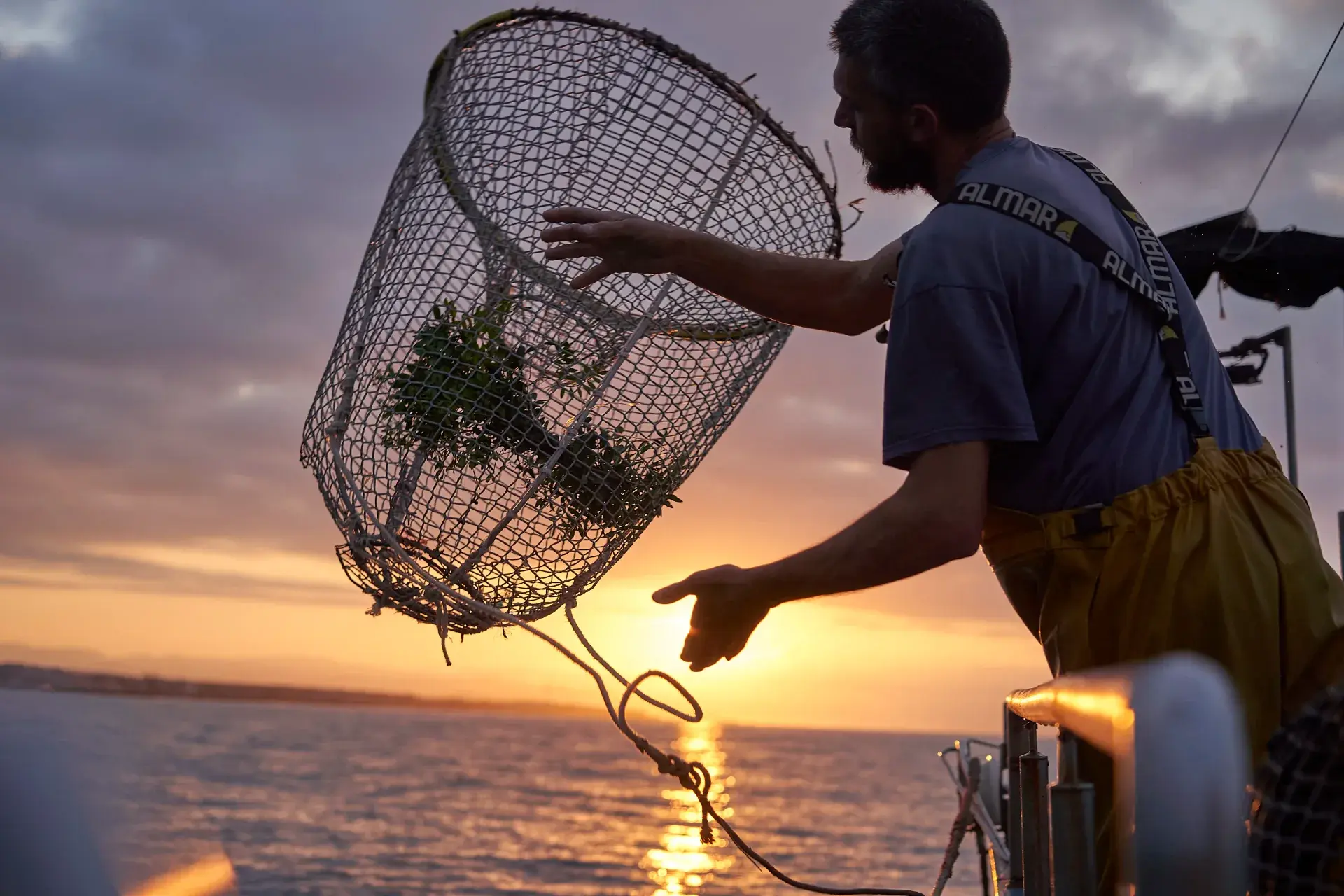
Challenge 1: traceability, little-known species and consumption. How to use artificial intelligence, data and digital traceability to make local fish and little-known or emerging species more visible, more understandable and more desirable for consumers and hospitality.
Challenge 2: making the trade easier and opening it to new profiles. How to use simple, low-cost technology to reduce the administrative and operational load on fishers while contributing to generational renewal.
Starting from the real context, rather than from enthusiasm for a solution, is what stops innovation from ending up as a pretty demo with nowhere to go.
A phased method: from the design process to the pitch
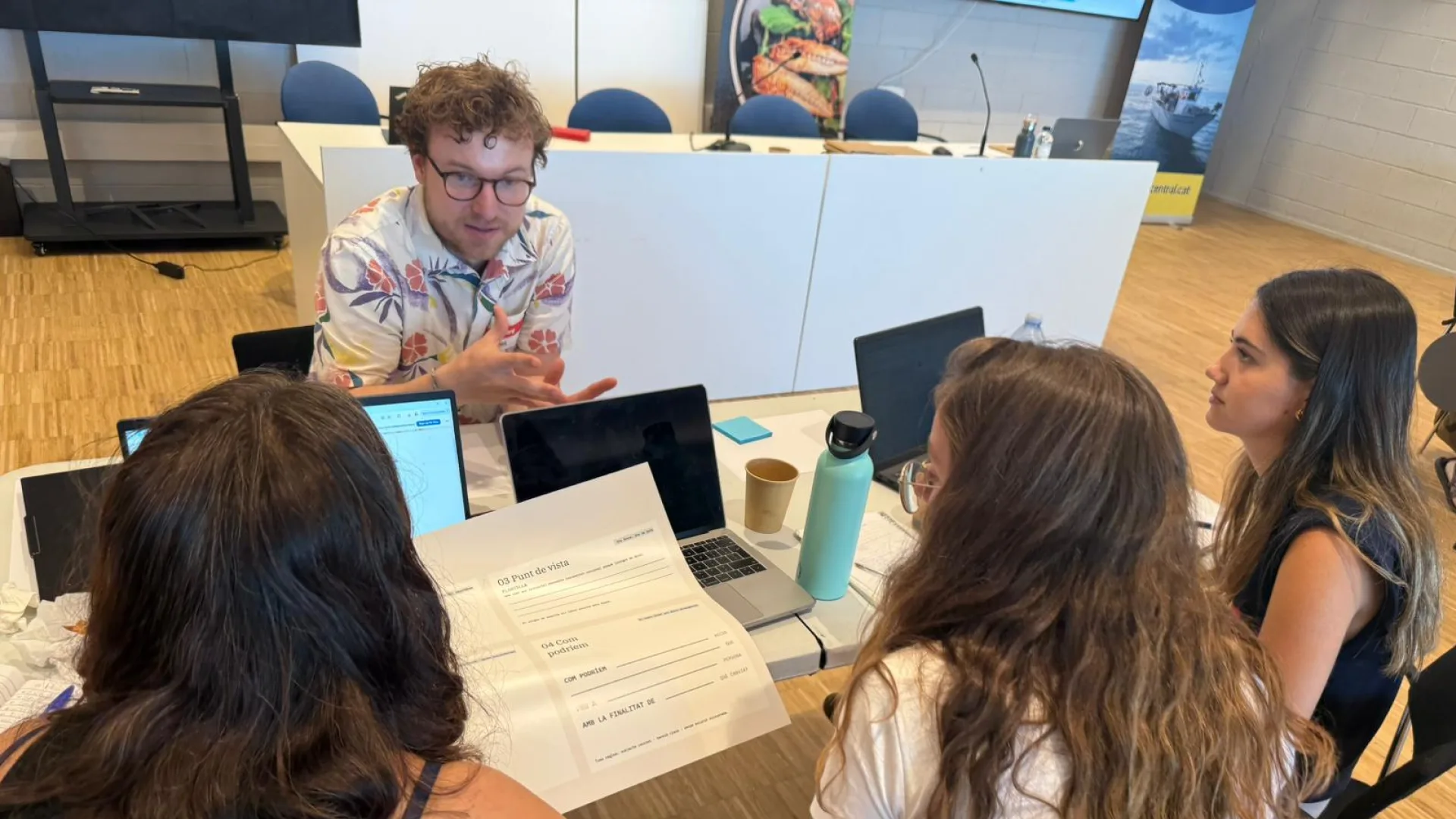
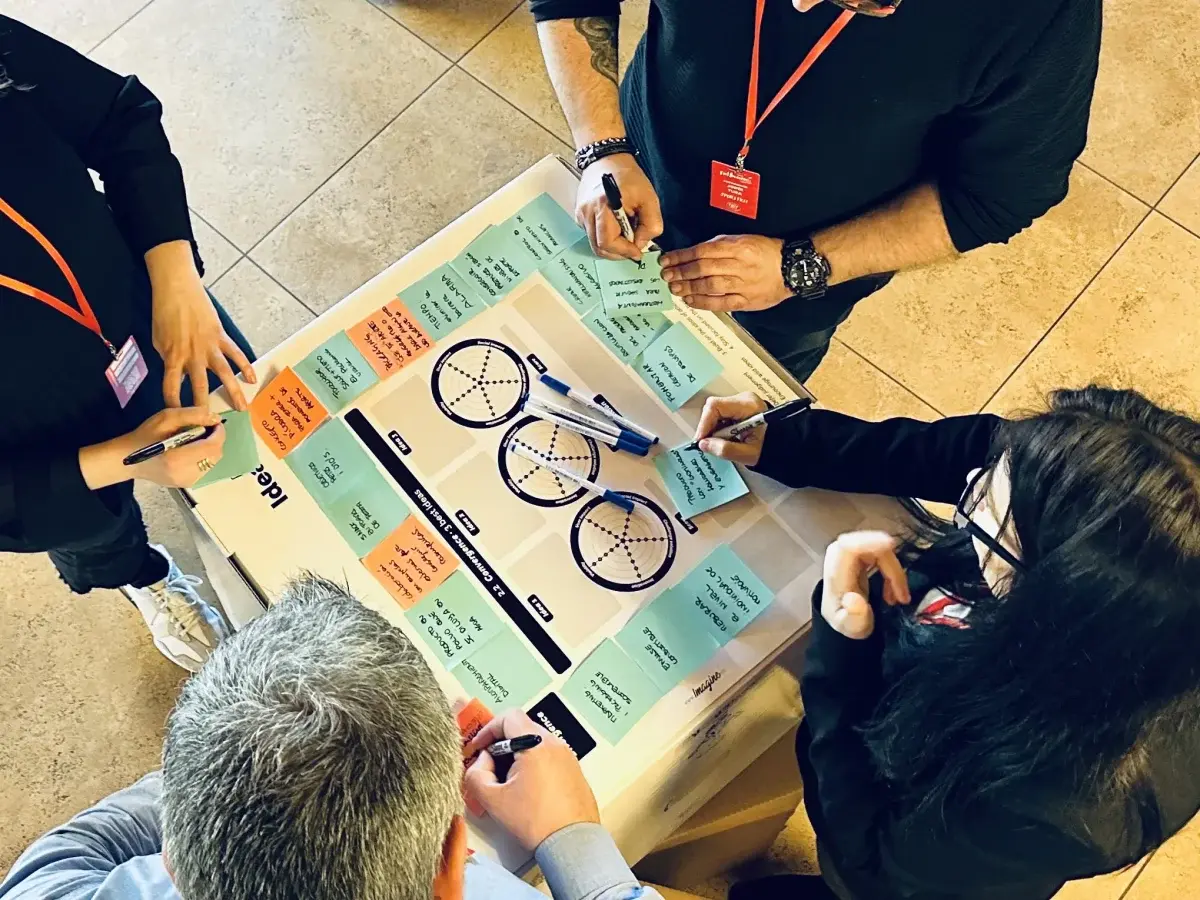
Creativity without structure scatters. That is why we applied the design process method (design thinking): a phased journey that starts in empathy and takes each team, step by step, from the problem to a proposal that can be explained in a single sentence.
- Empathy: bringing the challenge down to a specific person and framing a point of view and a “how might we…?”.
- Divergence: mass idea generation with techniques such as analogies from other sectors, SCAMPER or “what if…?”.
- Convergence: grouping, filtering and prioritising with a matrix of local impact against viability as a pilot.
- Prototyping and pitch: building a low-fidelity prototype and preparing a five-minute presentation.
- Presentation and deliberation: defending the proposal before the jury.
Throughout the process, teams were supported by context, innovation and project mentors. And the jury assessed against explicit, shared criteria: connection to the real problem (30%), viability as a pilot (30%), applied innovation (20%), social impact (10%) and clarity of the continuity plan (10%). The day began at 09:00 and closed at 15:00.
“We are in a seafaring city, yet most consumers barely know what kind of fish they eat or which products are genuinely in season.”
Reflection, Challenge 1.
Thirty people, six teams, many perspectives
The hackathon brought together 30 participants organised into 6 multidisciplinary teams of 5. That diversity was the real engine of the day: profiles from business and innovation; from technology, data and artificial intelligence; from the environment and sustainability; from communication, design and marketing; from research; from the fishing industry itself; and from hospitality and local produce marketing.
Bringing different perspectives into dialogue around a single challenge is the great power of a hackathon.
Who made it possible
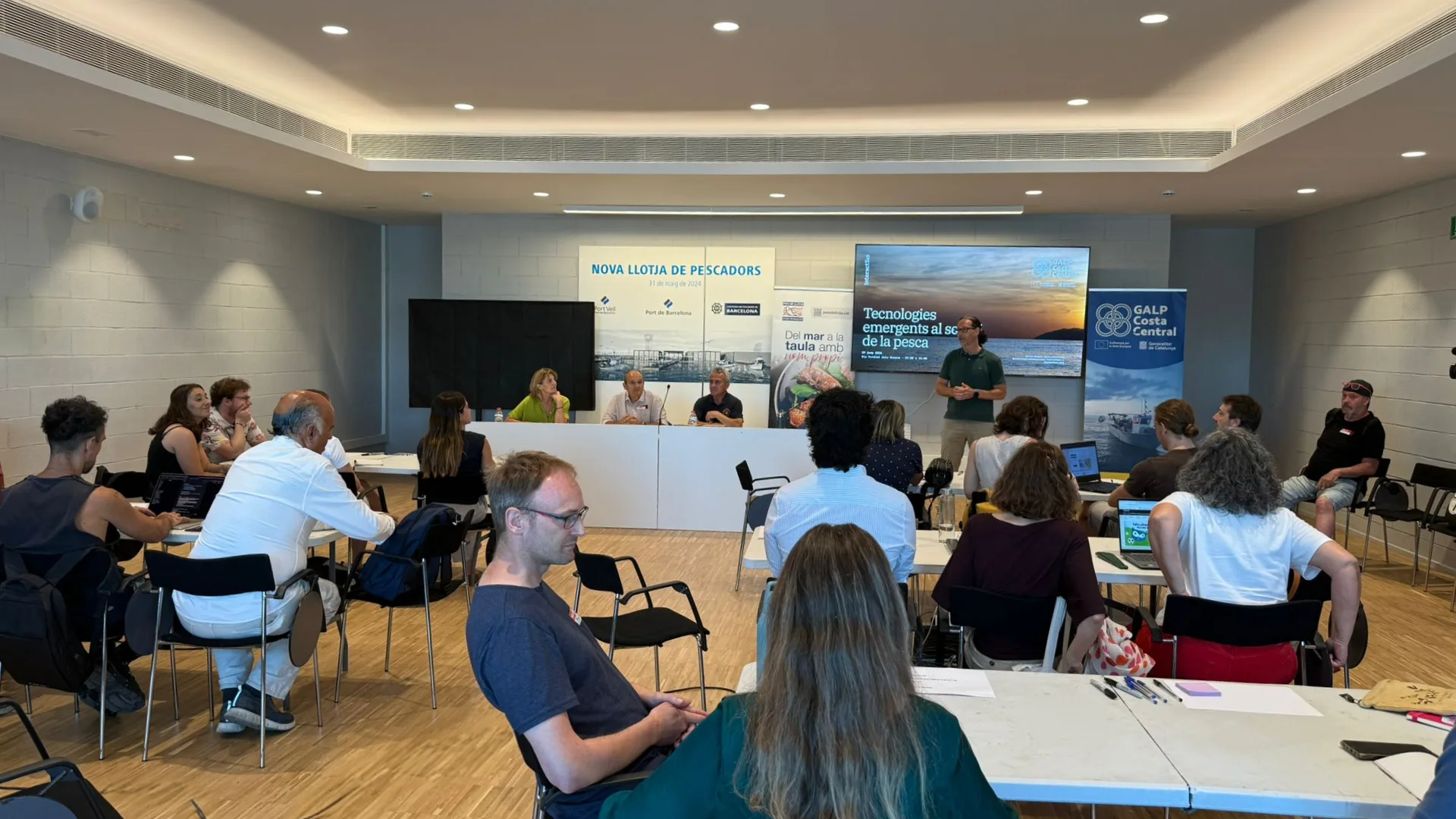
A day like this is only possible with a broad fabric of collaboration. The activity was promoted by GALP Costa Central and hosted by the Confraria de Pescadors de Barcelona, funded by the FEMPA Funds (Line B, GALP Costa Central). Also taking part and collaborating were the Federació Catalana de Confraries de Pescadors, Bluenetcat, ICATMAR, the ICM-CSIC, Barcelona Activa, the Universitat Politècnica de Catalunya (UPC), the Universitat Autònoma de Barcelona (UAB), the Generalitat de Catalunya, GALP Costa Brava and the Grups d'Acció Local Pesquers ARCA.
The people who guided and assessed the day were just as plural:
- Context mentors: Sergio Cabrera, Miguel Cabrera and Antonio Juárez, boat skippers of the Confraria de Pescadors de Barcelona.
- Framing the challenges: Rosa Leal Tort, head of Fisheries Product Marketing at the Generalitat de Catalunya (Challenge 1), and Pau Huguet and Sergio Cabrera, boat owners of the Confraria de Pescadors de Barcelona (Challenge 2).
- Innovation mentors: Miquel Ortega, researcher at the ICM-CSIC, and Francesco Pittito, head of innovation at Bluenetcat.
- Project mentors: Alfons Garrido, technical coordinator of the Grups d'Acció Local Pesquers ARCA, and Mireia Esteve, manager of GALP Costa Brava.
- Jury: Xavier Socías Pérez (manager of GALP), Pablo Bou (General Manager of Bluenetcat), Jordi Ribera (head of Information Systems at ICATMAR / CSIC), José Manuel Juárez (Patró Major of the Confraria de Pescadors de Barcelona and of the Federació Catalana de Confraries de Pescadors) and Rosa Leal Tort (Generalitat de Catalunya).
Six proposals, two winners
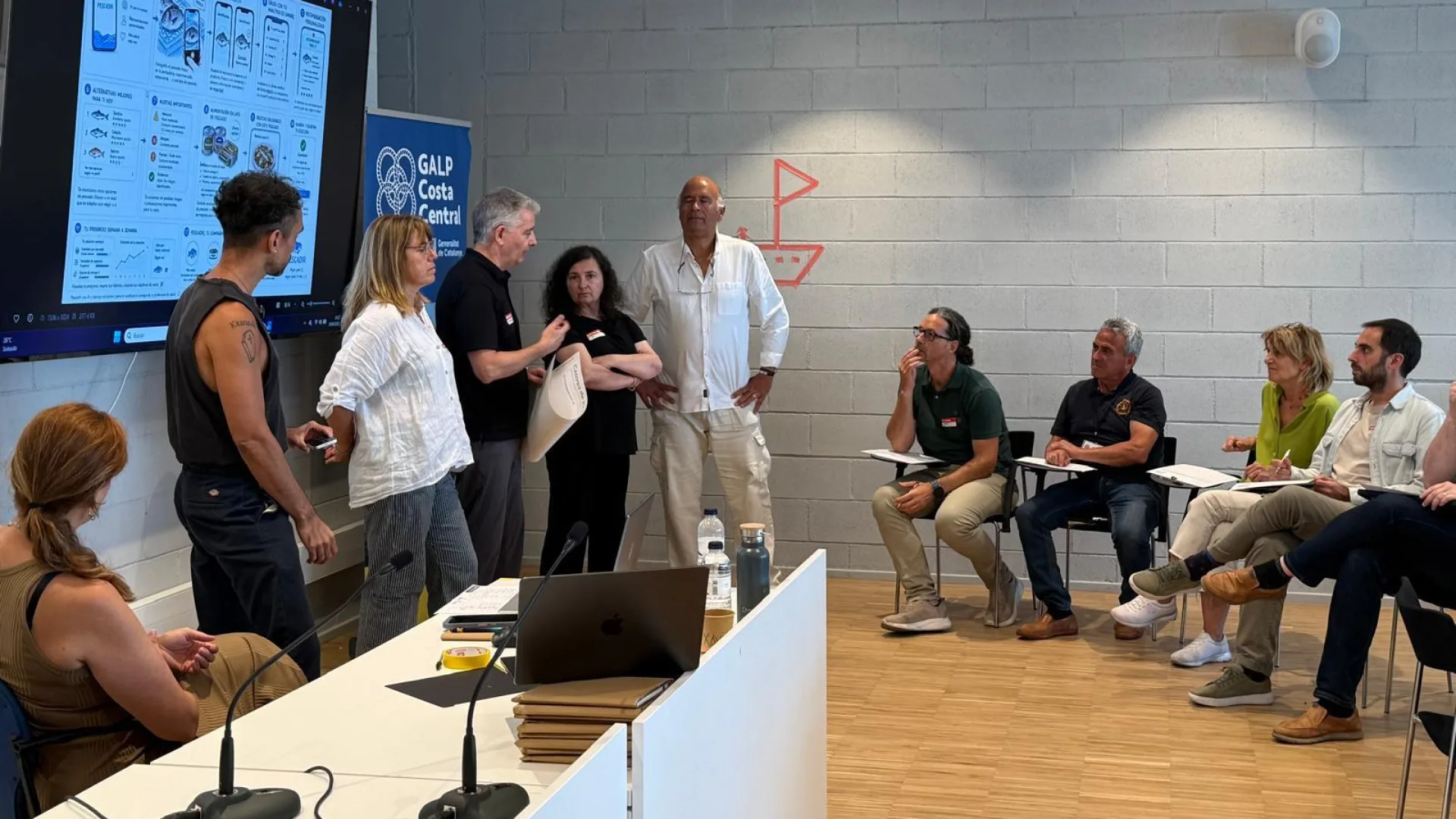
At the end of the day, the six teams defended their proposals before the jury, which selected one winning project per challenge: Group 3 for Challenge 1 and Group 6 for Challenge 2. Beyond the detail of the solutions, which remain in the hands of GALP and the local organisations, what matters is that all the proposals form a solid basis for weighing up future pilots, technical support or applications to new funding calls.
From challenge to proposal
At Interactius we do not just organise a day: we design the system that turns a real problem into decision-making capacity. We transform complex challenges into structured innovation processes through three lines of action:
- Strategic design to define the challenge. Before generating ideas, we make sure teams work on the real cause and not the symptom, aligning everyone around a shared diagnosis.
- Facilitating co-creation and decision processes. We design the process: phases, dynamics, criteria and closure. We define who takes part, what is non-negotiable and how choices get made, so ideas do not end up in permanent debate.
- From prototype to continuity. We help ideas move beyond the pitch: we turn them into prototypes and into an actionable roadmap (pilots, allies and next steps) so the work has somewhere to go.
We do not activate change from the outside: we build the internal capacity for your team to learn to decide and innovate autonomously, combining human talent with applied AI technology.
The best innovation is not born of the most advanced tool. It is born of putting the right people to work on the right problem.